Event management software, from the enquiry to the last round.
Software for the businesses that make events spectacular. Everything from the first enquiry to the gear back in the van, in one place.
Built around the date
The booking is built around the date
Most software treats a booking as a quote with a date on it. Here the date comes first.
A date, a site, a bump-in time, a crew and a pack-down. Everything hangs off the date, so moving a wedding by a fortnight moves every due date counted back from it, and anything already ticked off stays ticked off.
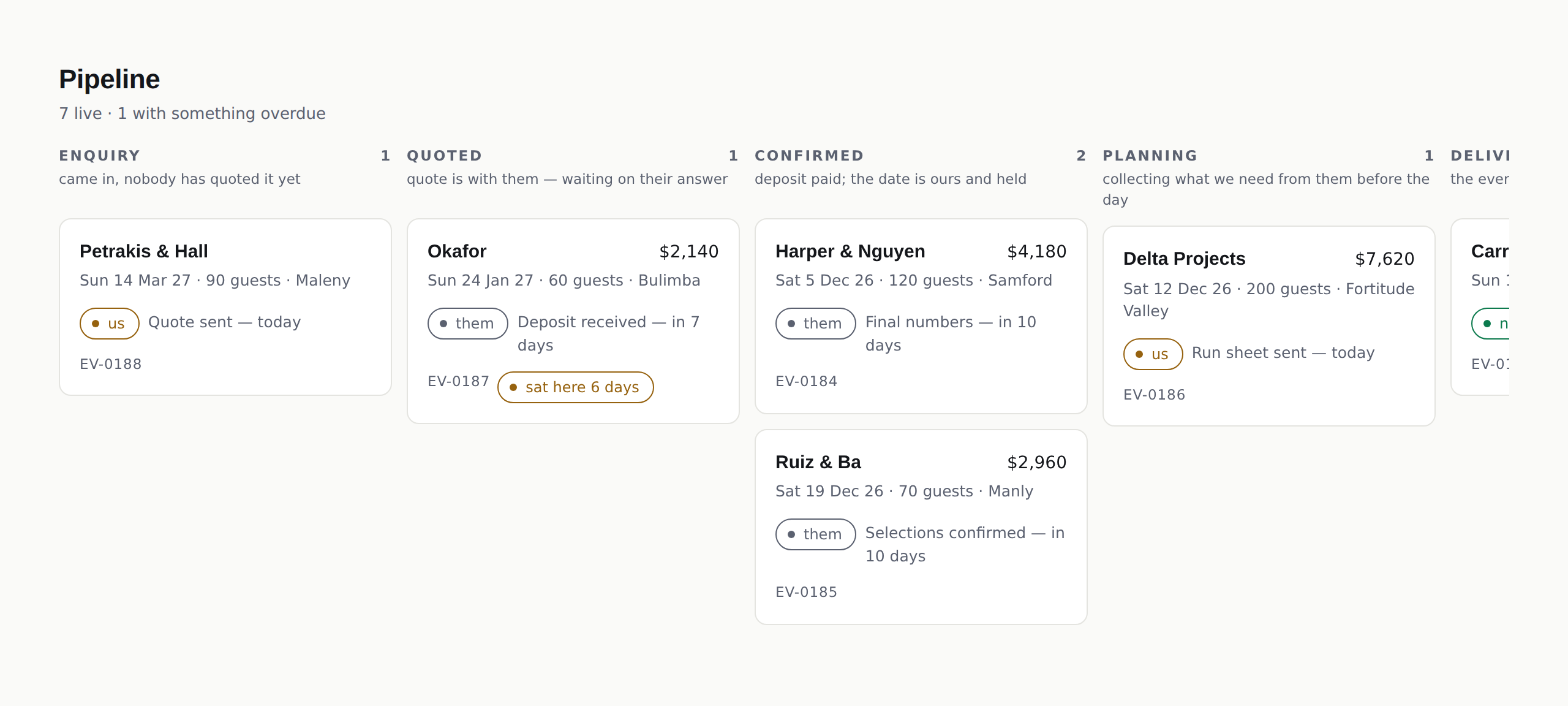
- The pipeline Enquiry, quoted, confirmed, planning, delivered, invoiced, closed. Each stage says what it means, in plain words, so nobody has to guess what someone else meant by it.
- The big moves ask first Confirming a date, marking a job paid in full and marking one lost each ask you before they happen. A booking should not move stages because a card got dragged by accident.
- The run sheet One page with the times, the site, the crew and their phone numbers, and what is being served. Printable, because a phone in a marquee at 11pm is not a plan.
- Nothing falls through A checklist that builds itself as the event moves along, with a due date on every line and the next thing to do shown on the booking itself.

Your crew
Half the job is the crew.
Rosters, shift offers, timesheets and tips live on the booking itself, not in a separate system you reconcile against it afterwards, and not in a paid add-on.
Rosters and timesheets
Who is on, who said yes, and what they are owed.
- Rosters people have said yes to Offer a shift and the person accepts or declines it. A roster full of names nobody has confirmed is not a roster.
- Timesheets and tips Hours and tips recorded against the shift, at the rate agreed for that shift. A pay rise in March does not rewrite what February cost you.
- Confirmed, then payroll A timesheet is a claim until the office confirms it. Then it exports as a CSV your bookkeeper can use.
- Tickets that expire RSA, forklift tickets, food safety certificates — with the expiry dates on the crew screen, not in a report nobody opens.
- Crew logins are free Everyone on your books can have a login that shows their own shifts and nothing else. You are never charged for one.
- Bar lead
- 6.5h · $42/h · $60 tips
- $333
- Bartender
- 6h · $42/h · $60 tips
- $312
- Runner
- 5h · $42/h
- $210
What the client picks
The one page your client sees. It does your chasing for you.
Send them a link — no password, no account to create, nothing else reachable from it. They choose their options, confirm their numbers and accept the quote. When they do, it ticks off on your board by itself.
- Their own page What is still needed from them, in plain words, with the dates.
- Their choices Cocktails, packages, menus, equipment — whatever you have put in your catalogue, priced as you have priced it.
- Final numbers They put the guest count in themselves. You stop asking.
- Quote acceptance Recorded with the time and who accepted it, so what was agreed is written down rather than remembered.
The run sheet
Everything the crew needs on the day, on one page.
Bump-in, service and pack-down times, the site and how to get into it, and who is on. Printable, because a phone in a marquee at 11pm is not a plan. There is a free run sheet template here if you want to see the shape of one.
- Bump in
- 2pm — gate off Mount Samson Rd
- Service
- 4pm to 11pm
- Crew
- A bar lead, a bartender and a runner
- Pack down
- 11pm — power off at the shed
- Guests
- 120
Money
Three different numbers, kept apart on purpose.
What was agreed, what has been invoiced, and what has actually been paid. A part payment goes in as its own line, so the amount you agreed is never overwritten, and ‘what are we still owed’ has one answer rather than an opinion.
- Agreed
- quote accepted 14 Oct
- $4,180
- Invoiced
- deposit · paid 14 Oct
- $1,900
- Paid
- cleared 16 Oct
- $1,900
It works with what you already run

See it on your own events
Bring a real booking and we will set it up in front of you.
Or write to hello@eventman.com.au. No newsletter, no automated follow-ups — a person replies.